
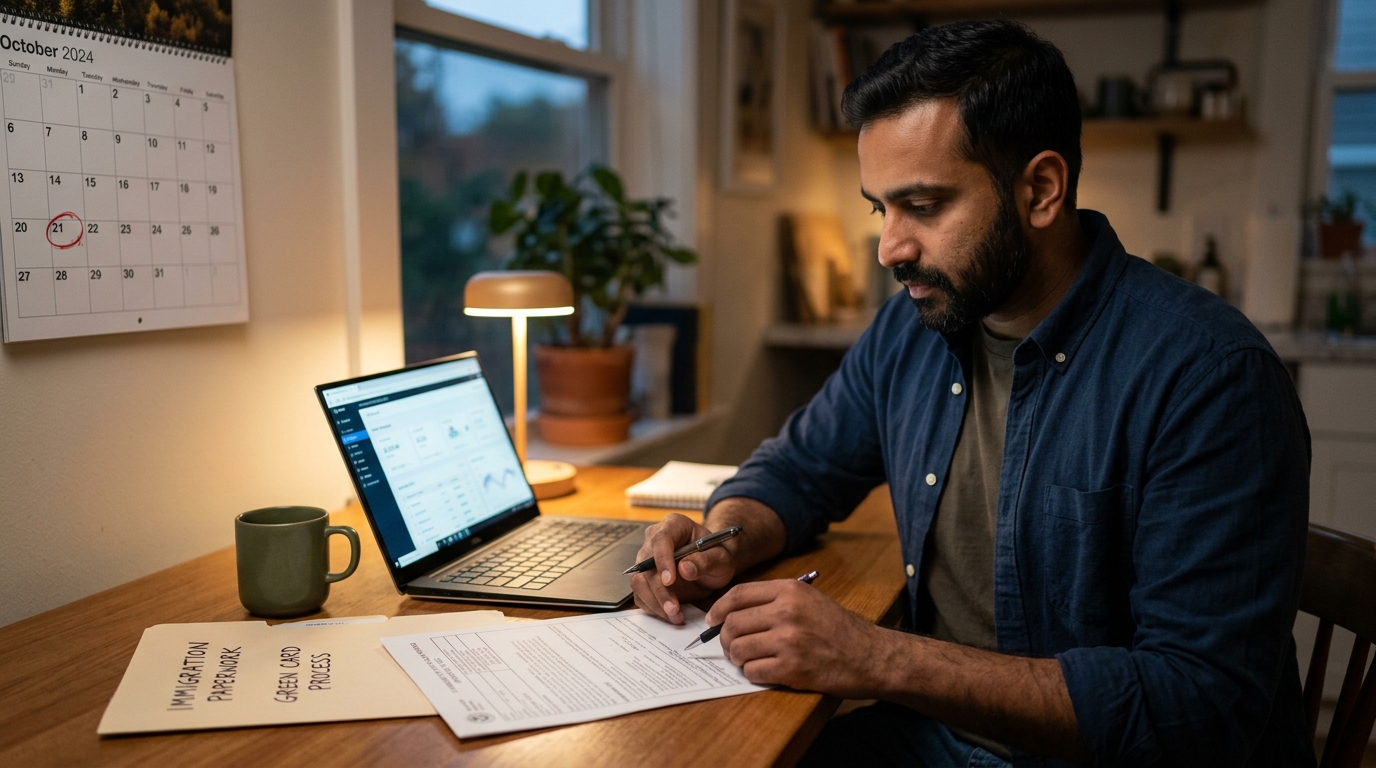
Six years on H-1B sounds like a hard stop. For most people, it is not. If your employer filed a PERM labor certification or an I-140 immigrant petition on your behalf and the process has not finished, AC21 almost certainly lets you keep working in H-1B status past year six.
The catch is that there are two different rules with two different names, two different triggers, and two different extension lengths. Confusing them causes filing delays and, occasionally, missed deadlines. This is the plain breakdown.
This is general information, not legal advice. Confirm your specific case with a licensed immigration attorney before you rely on any of it.
The Six-Year Limit and Why AC21 Exists
INA §214(g)(4) caps H-1B status at six years total. Without an exception, your status simply ends at that point, regardless of how close you are to a green card.
Congress recognized that green card processing times, especially per-country visa backlogs, routinely exceed six years for many applicants. The American Competitiveness in the Twenty-First Century Act of 2000 (AC21) created two escape valves so a stalled green card case does not force someone out of the country. Both are filed on Form I-129 with the H Classification Supplement, the same base form used for any H-1B extension or amendment.
AC21 Section 104(c): Three-Year Extensions With an Approved I-140
Section 104(c) applies once you have an approved I-140 immigrant petition, but you cannot yet file for the green card itself because your priority date is not current under the State Department Visa Bulletin.
To qualify, you generally need:
- An approved Form I-140 filed on your behalf.
- A priority date that is later than the relevant Final Action Date in the Visa Bulletin for your category and country of chargeability.
- The underlying job offer and petition still valid and not withdrawn or revoked in a way that voids eligibility.
If those conditions are met, USCIS may approve H-1B extensions in increments of up to three years. There is no statutory limit on how many times this can repeat. As long as your I-140 stays approved and your priority date stays behind the cutoff, you can keep renewing in three-year blocks, in principle indefinitely.
This provision is the reason long EB-2 and EB-3 backlogs for applicants born in India and China do not automatically end people's US employment. The green card queue can run well past a decade in some categories, and 104(c) is what lets someone continue working legally through it.
AC21 Section 106(a): One-Year Extensions on a Pending PERM or I-140
Section 106(a) is a different tool for an earlier stage of the process. It applies when the PERM labor certification (ETA Form 9089) or the I-140 petition has been filed but is still pending, not yet approved, and at least 365 days have passed since that filing.
To qualify, you generally need one of the following to be true at least one year before your six-year limit is reached:
- A PERM application was filed with the Department of Labor and remains unadjudicated, or
- An I-140 petition was filed with USCIS and remains unadjudicated.
If the 365-day clock has run and the case is still pending, USCIS may approve H-1B extensions in one-year increments, renewed as needed until the case is finally decided one way or another. Once the I-140 is approved and a priority date exists, the analysis shifts to whether 104(c) now applies instead, based on visa availability.
104(c) vs 106(a) at a Glance
| Feature | Section 104(c) | Section 106(a) |
|---|---|---|
| Trigger | Approved I-140, priority date not current | PERM or I-140 filed and pending 365+ days |
| Extension length | Up to 3 years per filing | Up to 1 year per filing |
| Number of renewals | No statutory cap | No statutory cap, while case stays pending |
| Typical stage | Later stage, waiting on visa backlog | Earlier stage, waiting on DOL or USCIS adjudication |
| Ends when | Green card is filed and finalized, or eligibility lapses | PERM/I-140 is approved or denied |
How to Request the Extension
- Track your six-year anniversary in H-1B status well ahead of time, ideally a year out.
- Confirm with your sponsoring employer or attorney which underlying case exists: pending PERM, pending I-140, or approved I-140.
- If the I-140 is approved, check the current Visa Bulletin Final Action Date for your category and country to confirm the priority date is not yet current, supporting a 104(c) filing.
- If the PERM or I-140 is still pending and was filed 365 days or more before the extension request, gather filing receipts to support a 106(a) filing.
- Have your employer file Form I-129 with the H Classification Supplement, along with supporting evidence: I-140 approval notice, PERM or I-140 filing receipt, and Visa Bulletin excerpt as applicable.
- Verify current filing fees, required attachments, and processing times directly on uscis.gov, since these change and should not be assumed from memory.
Two things stay true regardless of which section applies. First, the required wage rules that govern any H-1B still apply during the extension period. Second, your employer bears the H-1B petition filing costs required by regulation; that obligation does not shift because the case is a §104(c) or §106(a) extension rather than an initial petition.
If you are a few years out from year six and your green card case has not been filed yet, this is worth a conversation now, not the month your status is set to expire. The team at Josh Pros LLC works alongside consultants navigating exactly this kind of timeline and can help you think through the sequencing with your employer and attorney. Reach out at contact@joshpros.com or visit https://joshpros.com.
#H1BVisa #AC21 #GreenCardProcess #PERM #I140 #WorkAuthorization #ImmigrationLaw #TechConsultants #H1BExtension #VisaBulletin #ITStaffing #JoshProsLLC
This is general information, not legal advice. Immigration rules change and outcomes depend on your individual circumstances. Confirm anything that affects your case with a licensed immigration attorney.
Talk to a real recruiter, not a bot.
We'll tell you the rate, the client, and the terms before you interview. And if we're not the right fit, we'll say so.