
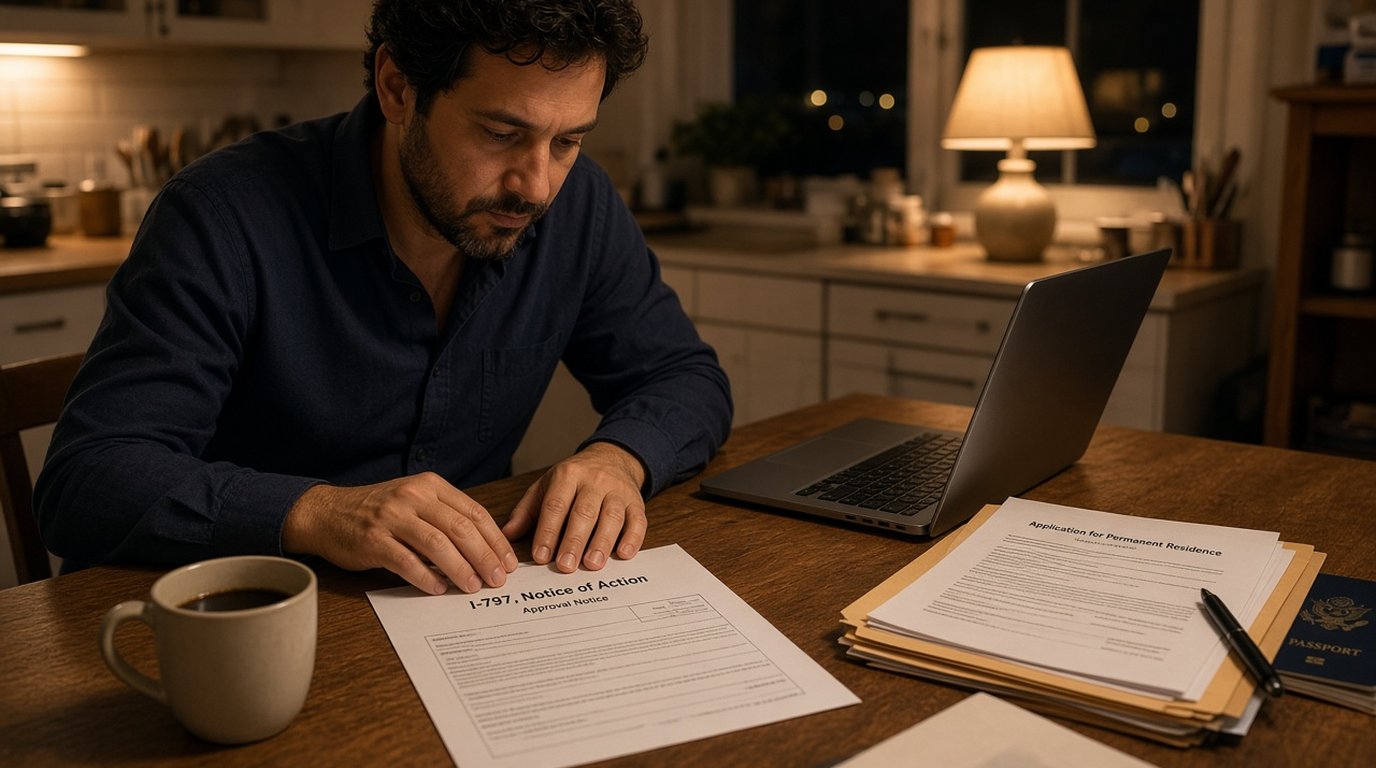
You booked the flight home before you thought about the paperwork. Now your H-1B transfer or extension is sitting at USCIS, unadjudicated, and someone in a forum told you that leaving the country kills it. Someone else told you it is fine. Both of them are half right, and the half that matters depends on exactly what your attorney checked on the I-129.
This is not a story about visa stamps being inconvenient. It is a story about a specific regulation that automatically abandons part of your filing the moment you cross the border, and about knowing which part. Get this wrong and you can turn a routine family trip into a stranded-abroad problem that costs your employer a bench period and costs you your project.
The Core Rule: Departure Can Abandon the Status Request, Not the Classification
Every H-1B petition (Form I-129) asks USCIS to do one or more of three things: approve the H-1B classification itself, extend the beneficiary's stay in that classification, or change the beneficiary's status into H-1B. Under 8 CFR 214.1(c)(4), if you depart the United States before USCIS decides a petition that requested an extension of stay or a change of status, that specific request is deemed abandoned automatically. No notice, no warning letter. It simply lapses the day you clear outbound immigration.
Here is the part people miss: abandonment does not necessarily kill the whole petition. USCIS can still approve the underlying H-1B classification. But because you abandoned the stay/status portion, that approval gets issued "for consular notification" instead of granting you status while you are physically present in the US. In plain terms, you now need a US consulate to put a fresh H-1B visa in your passport before you can use that approval to re-enter.
This is the exact mechanism behind change of status abandonment travel risk, and it applies whether the filing was an original change of status (say, OPT to H-1B) or a transfer petition that asked for extension of stay with the new employer.
Transfer (COS/EOS) vs. Straight Extension: They Are Not the Same Risk
Consultants conflate two very different fact patterns. One is genuinely risky to travel through. The other usually is not, provided your paperwork is in order.
| Scenario | What the I-129 requested | Effect of departure while pending | What you need to re-enter |
|---|---|---|---|
| New employer transfer, or first H-1B change of status (e.g., OPT to H-1B) | Change of status and/or extension of stay | That request is abandoned on departure. Classification may still be approved, but only for consular notification. | A valid H-1B visa stamp obtained at a consulate, plus the approval notice, before you can be admitted. |
| Routine petition-validity extension, same employer, your current H-1B period and visa are still valid at time of travel | Extension of stay, filed while you still hold unexpired status | You are traveling on your currently valid status, not relying on the pending filing. The extension keeps processing in the background. | Your existing unexpired visa stamp, your prior (still valid) I-797, plus proof of the pending extension (receipt notice) as supporting evidence. |
| Any petition, current status/visa already expired before travel | Extension of stay (lapsed or about to lapse) | You have no valid status to travel on. Re-entry in H-1B status is not possible until the extension is approved and, if needed, a new visa is obtained. | Approved I-797 plus a valid visa stamp. Do not depart in this position without attorney sign-off. |
The distinction that matters: if your current status and visa are still unexpired when you leave, and the extension is merely pending in the background with the same employer, you are not relying on the pending filing to re-enter — you are relying on status you already have. That is a materially lower-risk trip than departing on a filing that requested a change of status or where your underlying status has already lapsed.
What You Need in Hand at the Port of Entry
Immigration officers at the port of entry are not reading your USCIS case history. They are reading what is in your hand. Build the pack before you leave, not at the gate.
- Passport valid at least through your intended return date
- Unexpired H-1B visa stamp matching your current employer (or the employer on your most recent approved petition)
- Most recent I-797 approval notice, and the receipt notice for anything still pending
- Recent pay stubs and an employment verification letter confirming you are still working for the petitioning employer in the approved role
- Copy of the current Labor Condition Application (LCA) for the position
- If applicable, prior approval notices showing continuous H-1B history, to preempt questions about gaps
If your trip depends on a new visa stamp (the consular-notification scenario above), add the DS-160 confirmation page, appointment confirmation, and any Request for Information letters from the consulate to that pack.
Consular Appointment Waits and 221(g) Administrative Processing
If departure abandoned your stay request and you now need a new visa stamp, the consulate becomes the gatekeeper. Two things can extend that process well beyond the interview date itself: appointment availability and 221(g) administrative processing.
Appointment wait times vary enormously by post and change constantly. Do not plan around a figure you saw in a forum. Check the US Department of State's visa appointment wait time tool on travel.state.gov the same week you are deciding whether to travel, and check it again before you book a return flight.
Section 221(g) of the Immigration and Nationality Act allows a consular officer to issue a refusal pending further administrative processing — typically because of a required security or background check, or because additional documentation is needed. A 221(g) case can resolve in days or stretch much longer, and the consulate will not commit to a timeline. If your petition touched a transfer, a new employer, or any unusual gap in your H-1B history, build in the possibility of a 221(g) delay before you commit to a return date.
A Pre-Travel Risk Checklist
- Confirm with your attorney whether your pending I-129 requested extension of stay, change of status, or consular notification only.
- Confirm whether your current, previously approved H-1B status and visa are still valid through your planned return date.
- If the pending filing requested COS/EOS and would be abandoned by departure, decide with your attorney and employer whether the trip is worth the resulting need for a new visa stamp.
- Check the State Department wait-time tool for your specific consulate before booking anything.
- Assemble your document pack — approval notices, receipt notice, pay stubs, LCA, verification letter — before you leave, not after you land.
- Tell your employer's HR or immigration coordinator the exact dates you will be out of the country so they are not blindsided if a 221(g) delays your return.
This article explains the general mechanics of departure, abandonment, and consular processing. It is not legal advice, and every case has details that change the analysis. Confirm your specific filing type and timing with a licensed immigration attorney before you book travel.
Before You Book the Flight
The Josh Pros LLC team works with consultants moving between H-1B employers all the time, and we have seen how a routine trip home turns into a six-month visa delay when the filing type was not checked first. If you want a second set of eyes on your situation before you travel, email contact@joshpros.com or visit https://joshpros.com.
#H1BTransfer #H1BExtension #ChangeOfStatus #ImmigrationCompliance #TechConsultants #WorkAuthorization #221gProcessing #USCIS #ITStaffing #VisaTravel #H1BStatus #ImmigrationLaw
This is general information, not legal advice. Immigration rules change and outcomes depend on your individual circumstances. Confirm anything that affects your case with a licensed immigration attorney.
Talk to a real recruiter, not a bot.
We'll tell you the rate, the client, and the terms before you interview. And if we're not the right fit, we'll say so.